In 2024, a total of 182,407 animals were involved in 435 research and teaching protocols at UBC. This represents a 1 per cent decrease in the total number of animals involved compared to 2023.
By animal type
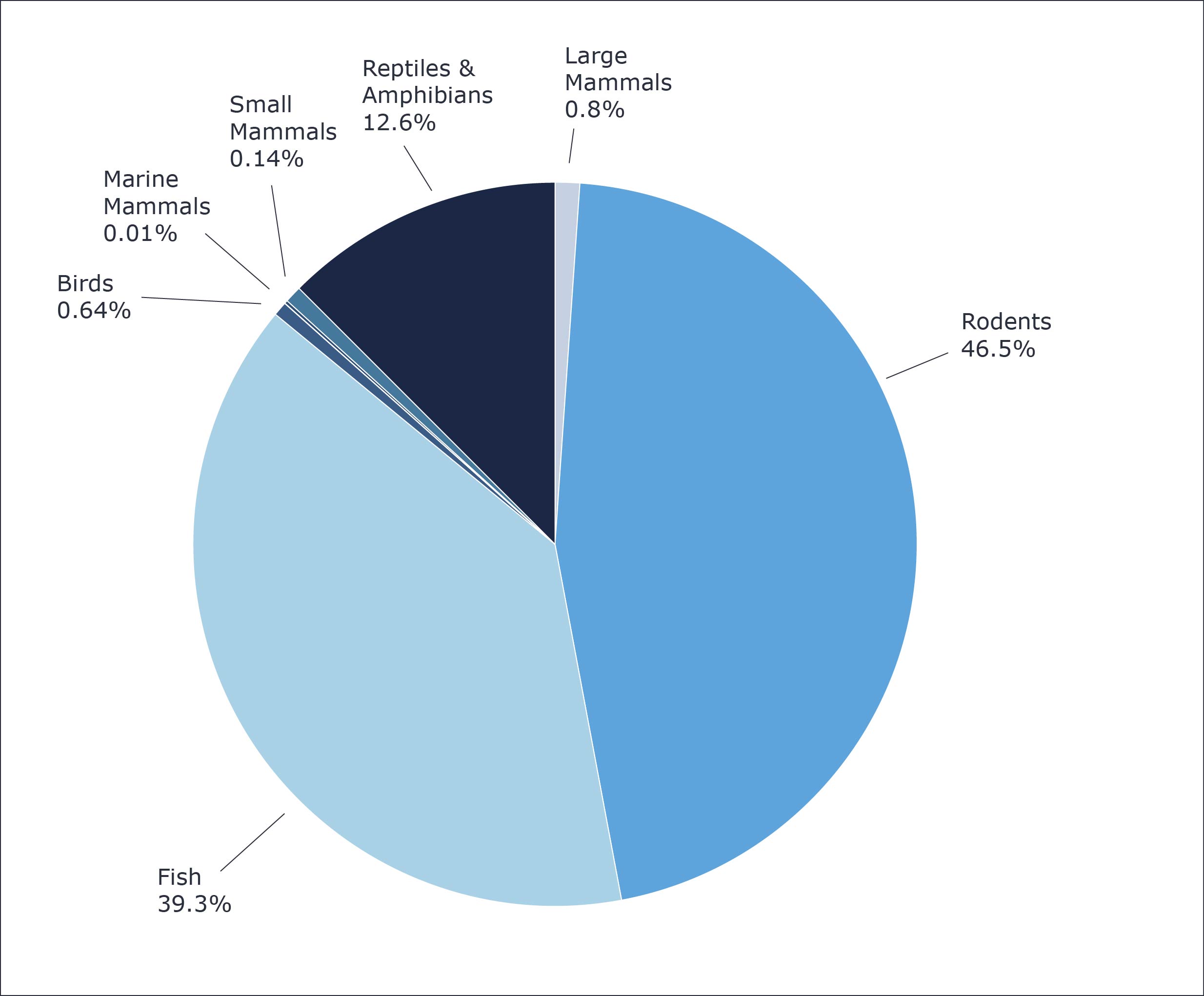
Rodents account for 46 per cent of the total number of all animals involved in research at UBC last year, and 98 per cent of the mammals. Small mammals, large mammals and marine mammals collectively represented less than one per cent of the total. The number of large mammals involved in research increased from 676 in 2023 to 1,405 in 2024 due primarily to large observational and behavioural research examining welfare in livestock. Other animals involved in research were fish (39 per cent of the total), birds (0.6 per cent of the total), and reptiles and amphibians (13 per cent of the total).
| Animal Type | Number | Percentage |
| Rodents | 84,761 | 46.5% |
| Fish | 71,747 | 39.3% |
| Reptiles/Amphibians | 23,050 | 12.6% |
| Birds | 1,164 | 0.64% |
| Small Mammals | 258 | 0.14% |
| Large Mammals | 1,405 | 0.8% |
| Marine Mammals | 22 | 0.01% |
| Total | 182,407 |
How were the animals involved in research?
The Canadian Council on Animal Care divides animal research into five Categories of Invasiveness (A to E).
Category A includes most experiments involving tissue cultures, eggs and single-cell organisms and does not require annual reporting.
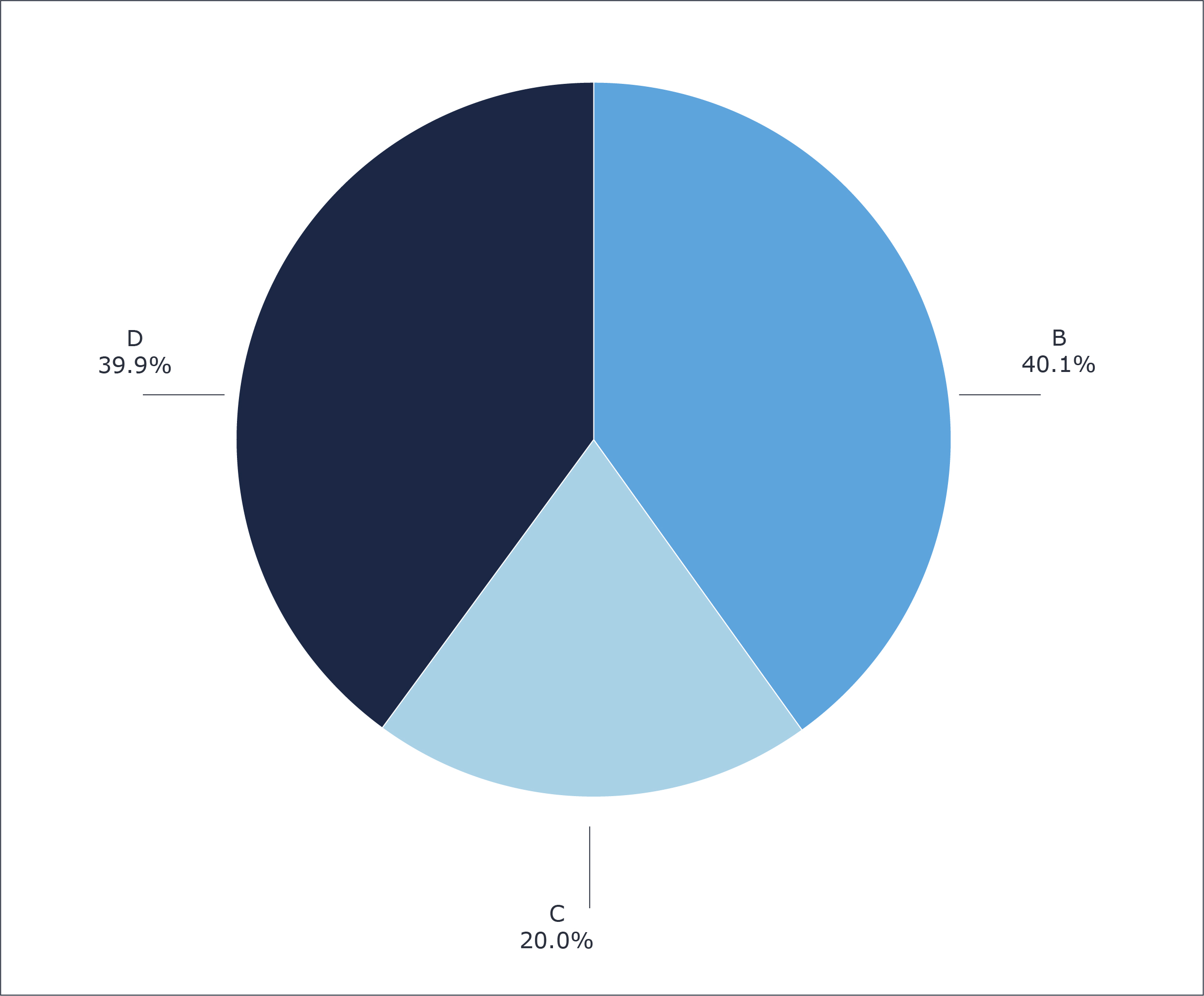
60 per cent of animals involved in research at UBC in 2024 fall under categories B or C. The invasiveness ranges from little discomfort and stress to minor stress and pain. For a wide range of animals this could include observation in the wild, brief periods of restraint for tagging, taking blood samples and minor surgical biopsies under anesthesia.
In Category D studies, rated for moderate to severe distress or discomfort, the proportion of animals involved in the category in 2024 fell to 40% per cent of the total. The total of 72,834 in 2024 is a decrease of 3,270 from 2023.
No animals were involved in a category E study.
| Category | Number | Percentage |
| B | 73,141 | 40.1% |
| C | 36,432 | 20.0% |
| D | 72,834 | 39.9% |
| E | 0 | 0.0% |
| Total | 182,407 |
By purpose
The Canadian Council on Animal Care (CCAC) divides the purposes for which we involve animals into six categories.
Purpose 0: Breeding
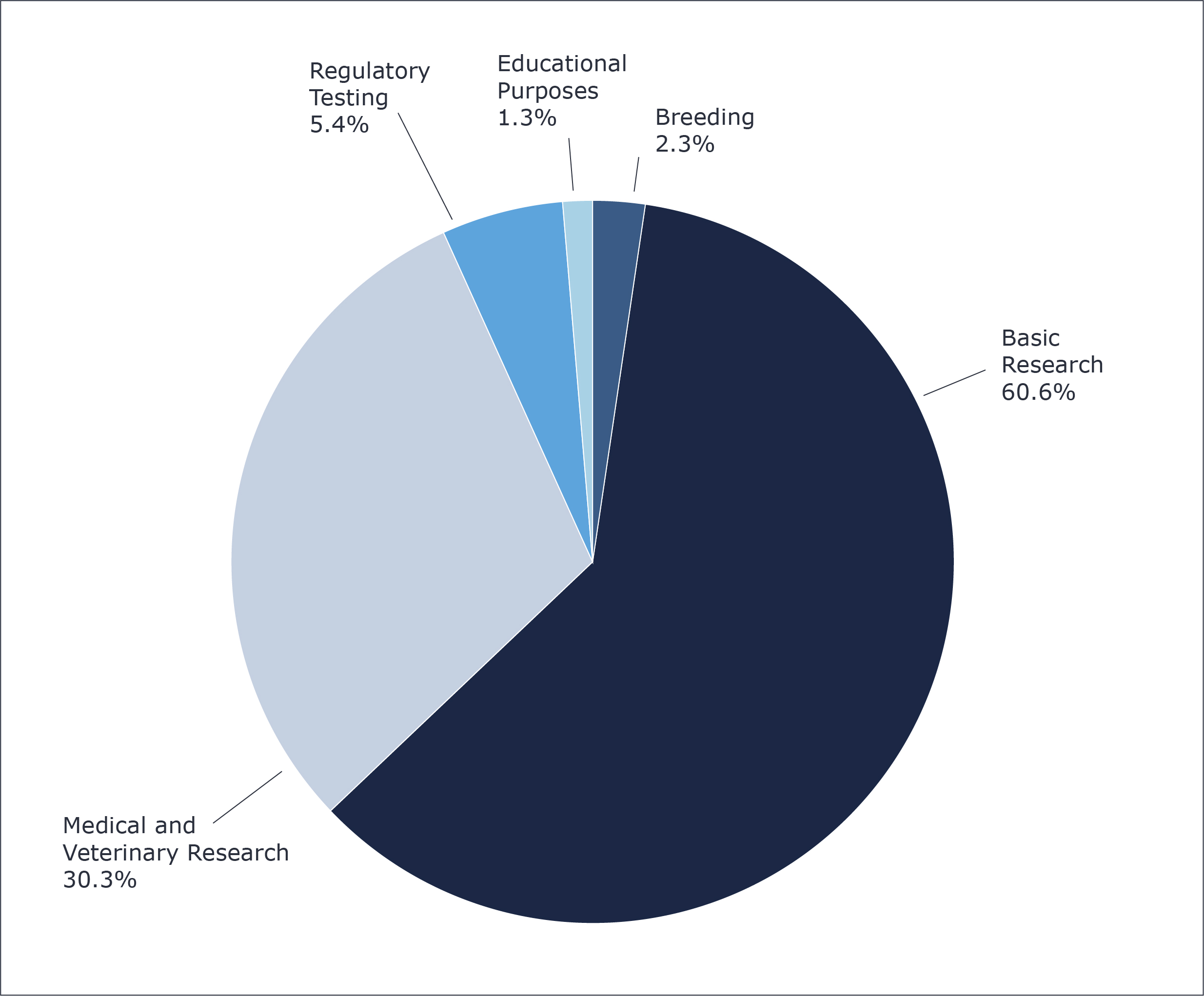
The number of animals in research involving breeding was 4,257 in 2024, compared to 5,008 in 2023.
Purpose 1: Basic Research
61 per cent per cent of animals were part of UBC’s inquiries in scientific disciplines that include biology, psychology, physiology and biochemistry. The number of animals involved in Basic Research decreased by 6 per cent compared to 2023 (110,491 in 2024, compared to 118,153 in 2023).
Purpose 2: Medical and Veterinary Research
This involvement of animals provides treatments for diseases that improve health care outcomes for both humans and animals. In 2024 there was a 3 per cent increase in the number of animals involved in this category, compared to 2023. (55,321 in 2024, compared to 53,462 in 2023.)
Purposes 3 and 4: Regulatory Testing
Canadian law dictates that animals be research models before humans in regulatory trials for drugs and general medical products. That requirement includes vaccines and medical hardware such as stents and heart valves. UBC makes every effort to minimize the number animals involved in regulatory testing. In 2024, 5 per cent of animals were involved in this area at UBC.
Purpose 5: Educational Purposes
Educational involvement of research animals includes several fields of study at UBC. The involvement of animals in teaching at UBC must be approved by individual faculties and the University Senate. Where possible, vertebrate animals are replaced by invertebrates. A little over 1 per cent of animals involved in UBC research were for educational purposes in 2024.
| Purpose | Number | Percentage |
| 0 (Breeding) | 4,257 | 2.3% |
| 1 (Basic Research) | 110,491 | 60.6% |
| 2 (Medical and Veterinary Research) | 55,321 | 30.3% |
| 3,4 (Regulatory Testing) | 9,920 | 5.4% |
| 5 (Educational Purposes) | 2,418 | 1.3% |
| Total | 182,407 |